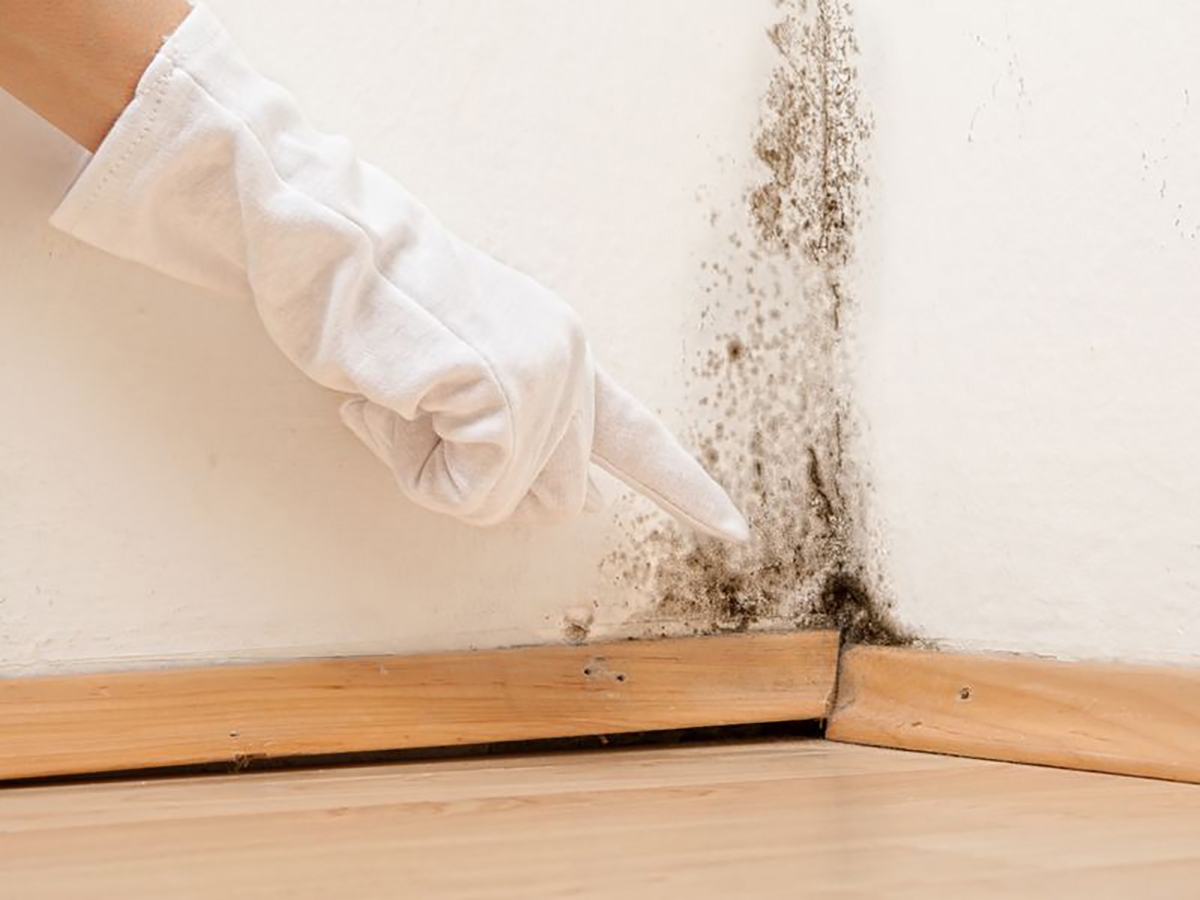
Moisture intrusion and dampness are the most important factors in the promotion of microbial growth in buildings. The American Industrial Hygiene Association (AIHA) has indicated that fungal growth is likely where an organic food sources is exposed to water for more than a few days or to prolong periods of elevated relative humidity at normal room temperature. Exposure to elevated levels of molds can cause health complaints of allergy, upper respiratory irritation, sinusitis, and eye irritation.
The World Health Organization (WHO) has concluded “sufficient epidemiological evidence is available from studies conducted in different countries and under different climatic conditions to show that the occupants of damp or moldy buildings, both houses and public buildings, are at increased risk of respiratory symptoms, respiratory infections and exacerbation of asthma.”
When water damage occurs it is imperative that the affected areas are aggressively dried (usually through fans and dehumidifiers) so that building materials are completely dry within a few days. The American Industrial Hygiene Association has indicated that fungal growth is likely where an organic food source is exposed to water for more than 24 to 48 hours or to prolonged periods of elevated relative humidity at normal room temperature.
Growth of molds in plaster, paint, sheetrock, ceiling tiles and insulation can lead to the amplification of airborne fungi and bacteria including higher levels of airborne spores and microbial fragments. Water damaged materials often support microbial growth even after they are dry, and dead material (spores, antigens, toxins, irritants) can remain in such material for years.
Please report chronic water leaks and flooding events to the union as soon as possible (for example, roof, plumbing and radiator leaks, condensation on surfaces and pipes, flooding events, etc).
More information about mold
Mold is in the news. People are talking about its potential health and economic impact. But what are the real risks and issues?
The available science is incomplete and sometimes controversial. Although there are several guidance documents available, there is no accepted national standard. Validated methods to measure contamination are still in their infancy, and even when measurement techniques are available, there are no clear benchmarks or standard values to compare the results against. Similar scientific uncertainties exist in the medical diagnosis of some mold-related health effects.
The scientific complexities alone would be a huge challenge, but the truth is that other difficulties dwarf them. The intense public and media attention on this topic often creates emotionally charged circumstances that make scientific judgment and reasoned dialogue difficult. In some instances, building owners tend to ignore or dismiss potentially serious problems. In other instances, building occupants or public officials can react with excessive alarm to perceived potential threats, complicating the scientific component of the evaluation and making risk communication very difficult.
Facts about mold
What is mold?
Molds are forms of fungi found all year round both indoors and outdoors. Outdoors, molds live in the soil, on plants, and on dead or decaying matter. Another common term for mold is mildew. Mold growth is encouraged by warm and humid conditions, although it can grow during cold weather. There are thousands of species of mold and they can be any color. Many times, mold can be detected by a musty odor. Most fungi, including molds, produce microscopic cells called “spores” that spread easily through the air. Live spores act like seeds, forming new mold growths (colonies) with the right conditions. All of us are exposed to fungal spores daily in the air we breathe.
How does mold get into a house or building?
Most, if not all, of the mold found indoors comes from outdoor sources. It needs moisture to grow and becomes a problem only where there is water damage, high humidity, or dampness. Common sources of indoor moisture that cause mold problems include flooding, roof and plumbing leaks, damp basements or crawl spaces, or any moisture condensation on cold surfaces. Bathroom showers and steam from cooking may also create problems if not well ventilated.
How can I prevent mold growth?
Controlling excess moisture is the key to preventing and stopping indoor mold growth. Keeping susceptible areas in the home clean and dry is very important. Ventilate or use exhaust fans (vented to the outdoors) to remove moisture where it accumulates, particularly in bathrooms, kitchens, and laundry areas. Clothes dryers should be vented to the outside. Repair water leaks promptly, and either dry out and clean or replace water-damaged materials. Materials that stay wet for more than 48 hours are likely to produce mold growth. Lowering humidity indoors helps prevent condensation problems. To lower humidity during humid weather, use air conditioners and dehumidifiers. Proper exterior wall insulation helps prevent condensation from forming inside during cold weather.
Can mold be toxic?
Some molds produce toxic substances called mycotoxins. Airborne mycotoxins have not been shown to cause health problems for occupants in residential or commercial buildings. The health effects of breathing mycotoxins are not well understood and are currently under study. In rare cases, high or chronic airborne exposures, typically associated with certain occupations like agricultural work, have been associated with illnesses. More is known about the health effects of consuming moldy foods or feed containing mycotoxins than about the effects of breathing mycotoxins.
What is “black mold”?
The news media often refer to “black mold” or “toxic black mold.” It is usually associated with Stachybotrys chartarum, a type of greenish-black mold commonly associated with heavy water damage. Not all molds that appear to be black are Stachybotrys. The known health effects from exposure to Stachybotrys are similar to other common molds, but have been inconclusively associated with more severe health effects in some people.
Why are we concerned about mold?
Small amounts of mold growth in workplaces or homes (such as mildew on a shower curtain) are not a major concern. But no mold should be allowed to grow and multiply indoors. Large quantities of mold growth may cause nuisance odors and health problems for some people. In addition, mold can damage building materials, finishes, and furnishings and, in some cases, cause structural damage to wood.
How do molds affect people?
Most people have no reaction when exposed to molds. Allergic reactions, similar to common pollen or animal allergies, and irritation are the most common health effects for individuals sensitive to molds. Flu-like symptoms and skin rash may occur. Molds may also aggravate asthma. In rare cases, fungal infections from building-associated molds may occur in people with serious immune disease. Most symptoms are temporary and eliminated by correcting the mold problem.
Who is affected by exposure to mold?
There is a wide variability in how people are affected by mold exposure. People who may be affected more severely and quickly than others include:
- Infants and children
- Elderly people
- Pregnant women
- Individuals with respiratory conditions or allergies and asthma
- Persons with weakened immune systems (for example, chemotherapy patients, organ or bone marrow transplant recipients, and people with HIV infections or autoimmune diseases)
Those with special health concerns should consult their doctor if they are concerned about mold exposure. Symptoms that may seem to occur from mold exposure may be due to other causes, such as bacterial or viral infections or other allergies.
What should I do if I see or smell mold in my school?
The most important step is to identify and fix the moisture sources causing mold growth. Report any water leaks to your chapter leader, principal, and/or custodial engineer. If water damage has progressed long enough without addressing it, it can cause mold to grow. The remediation procedures will depend on the size of the area and the material that was impacted. Moldy porous or absorbent materials (such as ceiling tiles, wallboard, carpeting, and paper) will need to be discard and replaced. With hard, non-porous materials or small mold problems, detergent and water may be used to wash mold off.
If you do not see mold growth but notice a musty odor, mold may be growing behind water-damaged materials, such as walls, carpeting, or wallpaper. You may also contact your Chapter Leader or the UFT Safety and Health Department directly to arrange a site inspection of your classroom.
How should a building be evaluated for mold growth?
Check building materials and spaces for visible mold and signs of moisture damage indicating a history of water leaks, high humidity levels, and/or condensation. Any occupant complaints or reported health problems should be noted as well as any musty or moldy odors.
Components of the building’s ventilation system should also be inspected. A moisture meter is often helpful in identifying wet or damp building materials. If mold growth or moisture problems are found, the air pressure differentials between the area of growth and surrounding areas should be determined. Potential air pathways from the source should also be characterized to determine its impact on the building and its occupants.
Facts about mold: a glossary
- Allergen
A substance that elicits an antibody response and is responsible for producing allergic reactions by inducing formation of IgE. IgE is one of a group of immune system mediators. IgE antibodies, when bound to basophiles in circulation or mast cells in tissue, cause these cells to release chemicals when they come into contact with an allergen. These chemicals can cause injury to surrounding tissue—the visible signs of an allergy. Fungal allergens are proteins found in either the mycelium or spores. Only a few fungal allergens have been characterized, but all fungi are thought to be potentially allergenic. - Biocide/Fungicide
Chemicals that limit the growth of or kill microorganisms such as fungi. - “Black mold”
This poorly defined term, which has no scientific meaning (also called “toxic black mold”), has been associated with Stachybotrys chartarum. While only a few molds are truly black, many appear black. Not all molds that appear to be black are Stachybotrys. - Fungi
Neither animals nor plants, fungi are classified in their own kingdom. The fungi kingdom includes a very large group of organisms, including molds, yeasts, mushrooms, and puffballs. There are more than 100,000 accepted fungal species—but current estimates range up to 10 million species. Mycologists (people who study fungi) group fungi into four large groups according to their reproduction method. - Hidden mold
Visible mold growth on building structures that is not easily seen. For example: above drop ceilings, within a wall cavity (the space between the inner and outer structure of a wall), inside air handlers, or within the ducting of a ventilation system. Visible mold within a ventilation duct is in immediate contact with the occupied space. Spores released from such growths are affected by air movement and relative humidity. Spores of mold growth in wall cavities are released by the air exchange between the wall cavity and occupied space. The rate of spore movement between such spaces is typically slow. Volatile gases produced by visible mold growth in wall cavities are also known to occur and migrate to occupied spaces even through air barriers. - Microbial volatile organic compounds (MVOCs)
Chemicals produced by fungi as a result of their metabolism. Some of these chemicals are responsible for the characteristic moldy, musty, or earthy smell of fungi, whether mushrooms or molds. Some MVOCs are considered offensive or annoying. Specific MVOCs are thought to be characteristic of wood rot and mold growth on building materials. The human nose is very sensitive to mold odors, sometimes more so than current analytical instruments. - Mold
A group of organisms that belong to the fungi kingdom (see Fungi). Although the terms mold and fungi have been commonly referred to interchangeably, all molds are fungi, but not all fungi are molds. - Mycotoxin
Compounds produced by “toxigenic fungi” that are toxic to humans or animals. By convention, the term “mycotoxin” excludes mushroom toxins and compounds of low potency or toxicity only in in vitro systems. The ordinary use of the term refers to compounds of importance in agriculture. This includes a small number of very potent compounds such as deoxynivalenol, aflatoxin, fumonisin, ochratoxin, and zearalenone. It also includes the much less common nivalenol, T-2/HT-2 toxins, as well as some other Penicillium and Aspergillus toxins and toxins from S. chartarum and Pithomyces chartarum. The biochemical targets of mycotoxins are usually many but the mechanisms of toxicity, even within families of toxins, are typically different.
The genetic property to produce mycotoxins is particular to given species. Some species including Fusarium graminearum and S. chartarum have genetic subpopulations called chemotypes that produce different mixtures of compounds. In the case of F. graminearum, these chemotypes are distributed by continent. In the case of S. chartarum, both chemotypes occur together. - Remediate
To fix a problem. Related to mold contamination, remediation includes fixing the water/moisture problem and the cleaning, removal, and/or replacement of damaged or contaminated materials. - Spore
General term for a reproductive structure in fungi, bacteria, and some plants. In fungi, the spore is the structure that may be used for dissemination and may be resistant to adverse environmental conditions. - Stachybotrys
Genus that includes approximately 10 species and occurs mainly on dead plant materials. Of these, Stachybotrys chartarum is the most common. This species is widespread and typically grows on straw. In the indoor environment, it is commonly found on cellulosic materials including paper, canvas, and jute that are wetted to a water activity > 0.98. This is a toxigenic mold. There are two chemotypes of this species that produce trichothecenes plus spirolactones or atranones plus spirolactones; these toxins have been demonstrated on mold-damaged building materials. The closely related species Memnoniella echinata occurs on the same materials but does not produce potent trichothecenes. Both chemotypes of S. chartarum and M. echinata typically occur together on samples of very wet cellulosic materials with M. echinata being more important in warmer climates. This fungus does not cause invasive disease. Antigens to S. chartarum have been identified. - “Toxic mold”
This has no scientific meaning, since the mold itself is not toxic. The metabolic byproducts of some molds may be toxic (see Mycotoxin). - Toxigenic fungi
Fungi that can produce mycotoxins (see Mycotoxin).
See also: OSHA guide to mold in the workplace