Celebrating cultural connections

The vintage card from the United Nations portrays the ideal of acknowledging multicultural holiday celebrations.
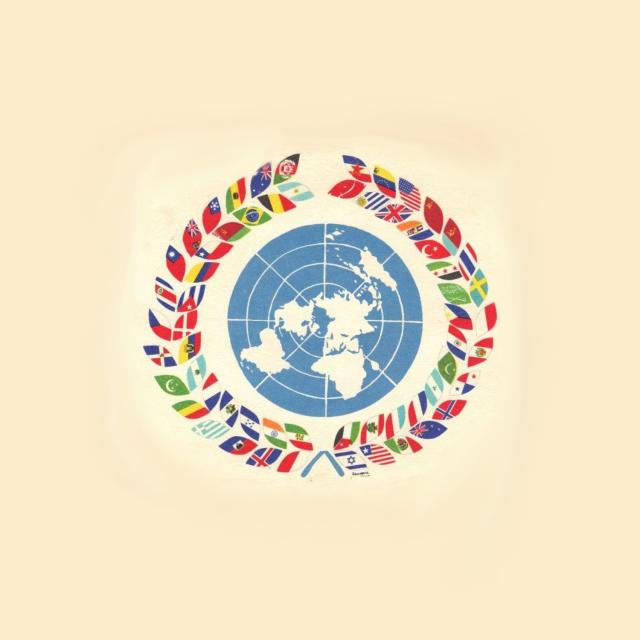
New York City has long been a place where people from different origins have lived together, often sharing and combining cultural flavors and traditions. In 2026-27, our school calendar recognizes more holidays across regions and religions than ever before.
In the coming months, city families may celebrate Diwali, Thanksgiving, Hanukkah, the winter solstice, Christmas, Kwanzaa, Lunar New Year, Ramadan, Eid or others, while some families may not observe any. This diversity creates opportunities for educators to celebrate traditions in meaningful ways that both authentically represent cultures while also making every student feel included.
City Department of Education guidance on holiday observances mandates that celebrations and displays must serve an educational purpose and promote mutual understanding. Schools may teach the history and cultural importance of religious and secular observances as long as instruction is objective and does not promote any particular faith. Schools are allowed to display holiday symbols that have secular recognition, such as Christmas trees, menorahs, dreidels, kinaras and the Islamic star and crescent, but images of deities, religious figures and religious texts are prohibited.
Educators stress the importance of having children contribute to conversations about their own backgrounds. “Holidays are great ways to celebrate people’s cultures and customs,” said UFT Asian American Heritage Committee Vice Chair Annawa Naing, the UFT District 30 representative and New York State chair of the AFT Asian Caucus. If you have a student celebrating a particular holiday, “ask that student to show pictures or bring something to tell the class about how their family celebrates that holiday,” Naing suggested.
“When students share family traditions, languages or celebrations, I create opportunities for them to connect those experiences to our reading, writing and classroom conversations,” said UFT Muslim Educators Committee Vice Chair Dina Hassan, a UFT special representative. “Students learn from one another while also developing their academic skills.”
Demonstrating the inherent multicultural nature of world religions can also promote inclusivity. “Judaism is a story of many cultures,” said Jason Goldberg, chairperson of the UFT Jewish Heritage Committee and a UFT special representative. “With over 2,000 years of diaspora across Europe, Africa, the Middle East and Central Asia, Jewish communities picked up the flavors of the places they lived,” he explained.
A traditional Jewish meal may be prepared differently depending on the part of the world in which it is being cooked, yet still remain an authentic observance. “While geography helps shape the manner in which we celebrate,” said Goldberg, “it is the traditions that keep us together.”
Literature is an excellent tool to inclusively recognize diverse cultures since it provides students with both “mirrors” and “windows” experiences, through stories that reflect their own cultural experiences alongside stories that explain the traditions and histories of others. By building classroom libraries with authors from a wide range of cultures, teachers can help every student feel a sense of belonging. “Read alouds can be great for elementary students,” said Naing. For older students, pairing texts with discussion, writing and connections to cultural observances integrates linguistic skills in meaningful ways to honor diversity.
Educators may be concerned about how to approach multicultural education, but Hassan advises that “we don’t have to know everything about every culture or religion. We can learn alongside our students, listen to families and lead with kindness and respect.”
For specific guidance, the DOE’s Hidden Voices project provides high-quality multicultural curriculum. Developed in partnership with the Museum of the City of New York, the Hidden Voices curriculum highlights the stories, contributions and perspectives of historical figures and underrepresented communities often left out of traditional New York City history.
“New York City Public Schools is committed to ensuring that every student has access to a rich, inclusive education that reflects the diversity of our city and the world around us,” said a DOE spokesperson. “Our classrooms should reflect that diversity, and students deserve to see themselves, their histories and their communities represented in what they learn.”
The complete Hidden Voices curriculum can be found on the DOE’s Social Studies & Civic Hub online. Educators can explore lessons focusing on stories of individual New Yorkers representing a wide range of figures, like Eliza Jennings Graham, Wong Chin Foo and David Ruggles, or immerse their students in full units on Latinos in United States history, the African diaspora, Jewish Americans, Asian Americans and Pacific Islanders, Muslim Americans and Caribbean American heritage, among others.
The DOE also promotes heritage month guides on its social studies hub, featuring lesson plans and primary sources. The UFT also has several culturally responsive curriculum resource pages geared toward educators.
“Representation matters,” said Hassan. “Every parent wants their child to feel that there is a place for them in their classroom. And every educator has the opportunity to help make that place feel like home,” she said. “When a child sees their holiday, culture, name, language or family tradition acknowledged in the classroom, it can send a powerful message: ‘I am seen. I am respected. I belong.’”