Samuel Berck, math teacher at Rikers Island

Samuel Berck
What’s something that surprises people about your job?
That there’s a school at all on Rikers Island. We’re part of District 79 and prepare students ages 18–21 for the GED.
Why did you take this job?
I knew it would be a change of pace and a challenge.
Has it been rewarding?
In some ways, it’s frustrating, but I also think, “Who else is going to help these students?” The elation they have when they pass a portion of the GED, the feeling that they can succeed — even when they’re not seeing success in so many other parts of their world — is amazing. You can see they’re still young adults, and they’re still learning. I feel like I’ve helped someone do something better with their life than be trapped in the cycle of recidivism.
What’s a typical day like?
There is no such thing as a typical day. Because our school is under both the Department of Correction and the Department of Education, there’s always a discussion between these two groups. An ideal typical day would be that the students come up at 8 a.m. and I teach 50-minute periods covering the subjects they need to pass the math portion of the GED. What often happens instead is that a fight has broken out, and some or all of my students can’t come up to the classroom. Or they refuse to come up. Sometimes the students come up very agitated because they have been unable to leave their cells for several days. Anyone would be frustrated and upset after that much time with no movement. We always have to adapt.
All teachers are aware of their students’ social-emotional states, but as a teacher of incarcerated students, how do you manage their emotional health?
These students are having a very hard time. It’s very difficult to teach someone who has that much else on their mind — they’re arrested and waiting for their hearings — and convince them that now they want to find the equation of this line and slope-intercept. I try to make them feel comfortable enough to understand that I’m working with them to help them achieve a GED, which will give them more options no matter what happens to their case. It is something they have to their name, either for job applications, college applications or even as evidence in court that they are working to better themselves.
What is the most challenging part of your work?
The setting. It’s a very emotionally demotivating place.
What is your favorite memory of your career so far?
At the beginning of this year, we had a student who during the summer had taken the math portion, and he had failed by one point. We weren’t sure if we could get him to pass this time. So I had him pulled out so I could tutor him one-on-one on my prep periods. And the testing coordinator told me that during the test he said, “Wait, wait, I know how to solve these! I’ve got this, I’ve got this!” And he did indeed pass and graduate.
What do you wish other people knew about your job?
That despite our unusual situation, we’re still licensed teachers, and we’re still giving our best to our students. Like all teachers, we are going to do our best to help our students succeed despite their circumstances.
—As told to Leigh Anderson
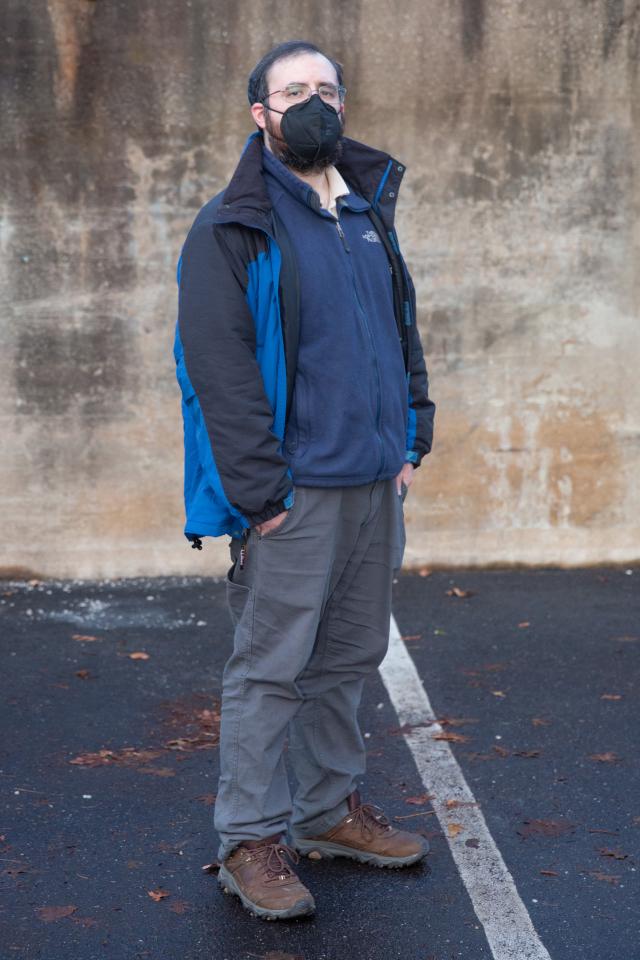
Samuel Berck instructs incarcerated students at the East River Academy at the Rikers Island jail complex.