
Veronica Herrera
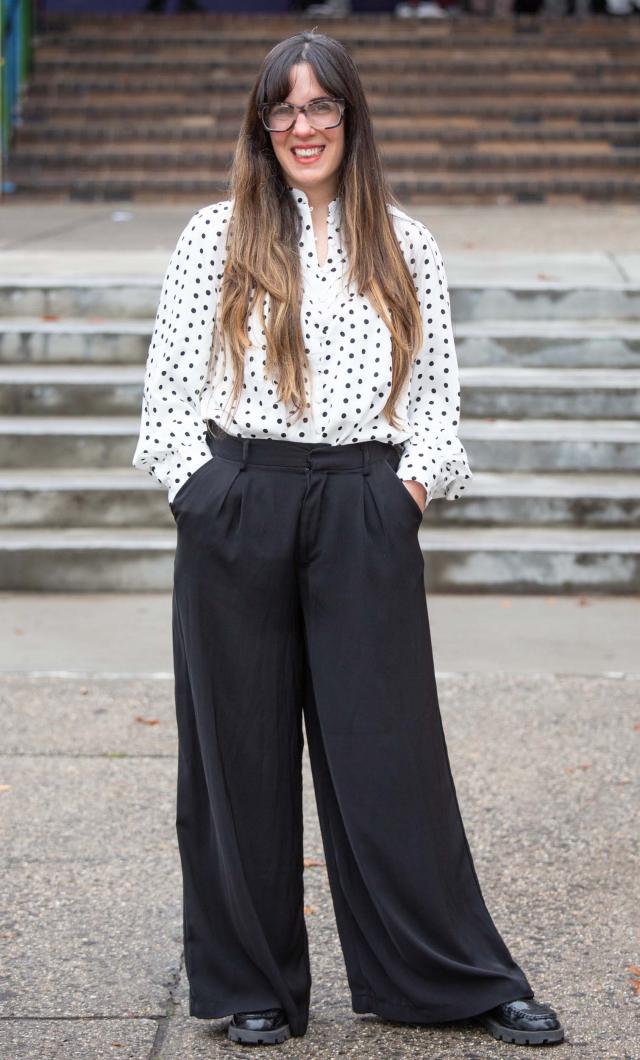
Veronica Herrera supports students making their postsecondary plans at Hillcrest HS in Jamaica.
How did you decide to become a high school counselor?
I grew up in the Dominican Republic. I went to college to study business, but while there I took a job as an ESL teacher, and it changed me. I fell in love with helping students. I switched my major to education. After graduating, I taught every school level, but I always liked the high school students the best. They’re discovering who they are, and it’s wonderful to be a part of that conversation.
I came to New York in 2016 to go to grad school to become a school counselor. I really enjoy making students aware of the options and opportunities available to them so they can have a good quality of life. I liked teaching a lot, but counseling is my place.
When did you start working as a counselor in city public schools?
I began working at Hillcrest HS in January 2020, two months before COVID hit. There was so much uncertainty for the students during the first year of the pandemic. Would they be able to go to college? Would it be in person or virtual? I learned how to adapt to uncertainty while making my students feel supported.
What is your weekly schedule like?
Every Thursday, junior advisory classes head into our College & Career Center to participate in hands-on postsecondary planning workshops. On Fridays, senior advisory classes visit to receive support and dedicated time to complete their college and career applications.
How do you help students decide what path is right for them?
It’s not always obvious. It’s a lot to ask of a 17-year-old to know what they want to do for the rest of their lives. I make sure every student applies to at least one college because so many of them say they want to go right into a career, then change their mind in the spring. Most of our students are immigrants or their parents didn’t attend college. It’s important to help them develop the self-reliance to manage those decisions on their own later on. I expose them to different options. We go on a lot of school trips to colleges, trade schools and college and career fairs. I help them research military and job training and placement programs. My goal is to help students make the most affordable postsecondary plan that sets them up so they’re not living paycheck to paycheck.
What’s your favorite memory from your career so far?
A technology teacher once brought a senior to meet with me. This student was so closed off. She wouldn’t make eye contact, and her arms were always crossed. Slowly, I learned about her situation, and we connected. Her biological parents were out of the picture, which is difficult emotionally and makes college applications more complicated.
A lot of students have walls up. From their perspective, who am I? How am I supposed to help or even understand? I just try to listen — and talk with them, instead of at them.
In the end, this student got a full ride at college and an engineering scholarship that gave her extra money and an internship. We’re still in contact, and she’s thriving!
That’s what makes me so happy every year: Seeing students learn about opportunities, take advantage of them and be successful.
— As told to Hannah Brown