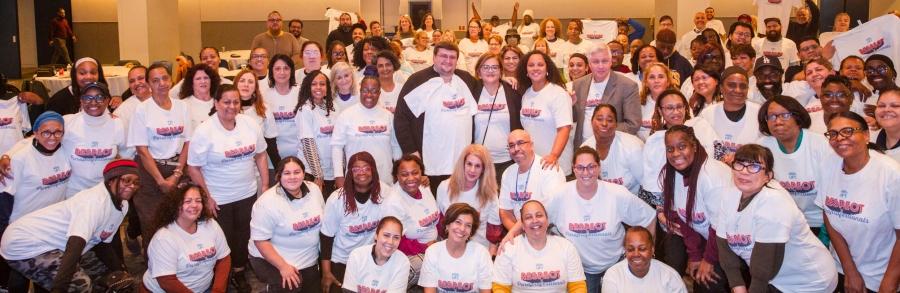
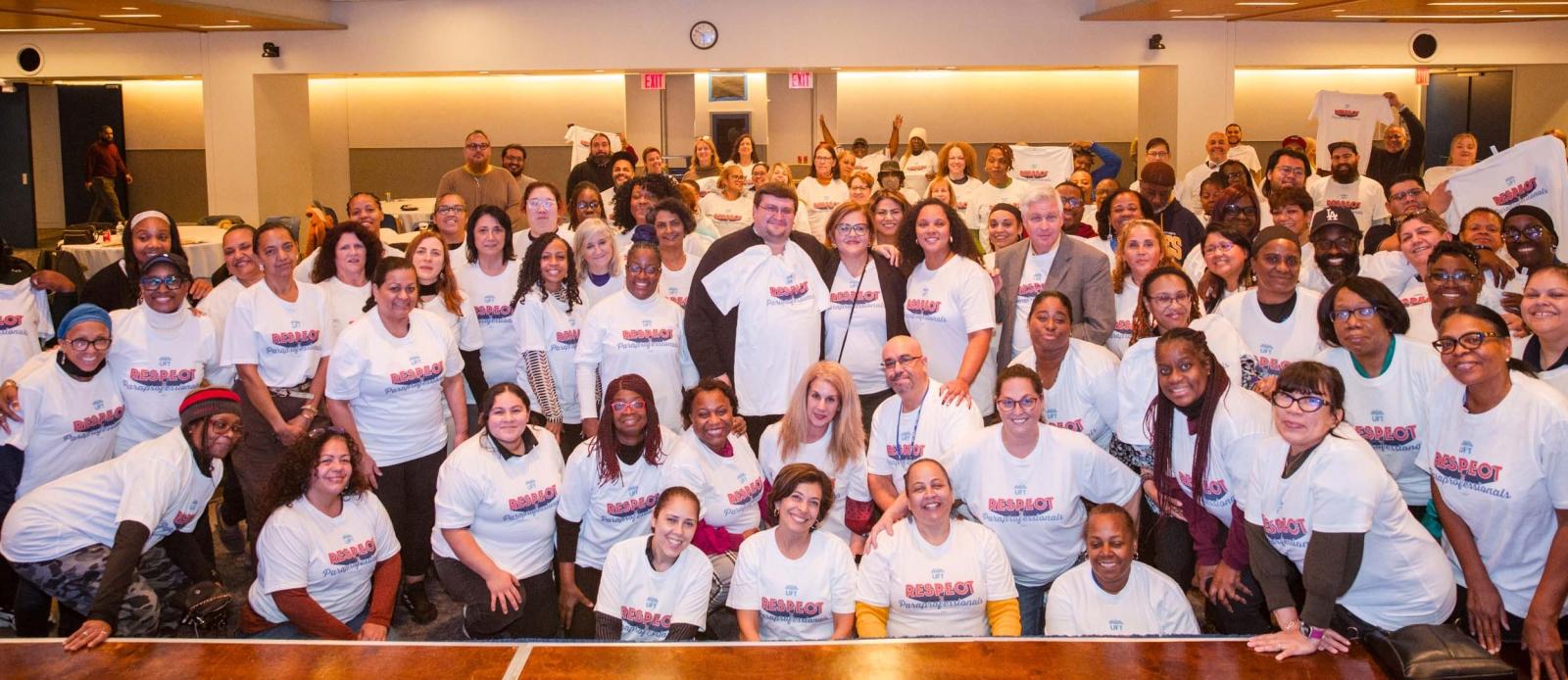
Paraprofessional representatives wear UFT T-shirts reading "RESPECT for Paraprofessionals" at their monthly meeting for the launch of a campaign for better compensation, training and treatment for the chapter's 26,000 members.
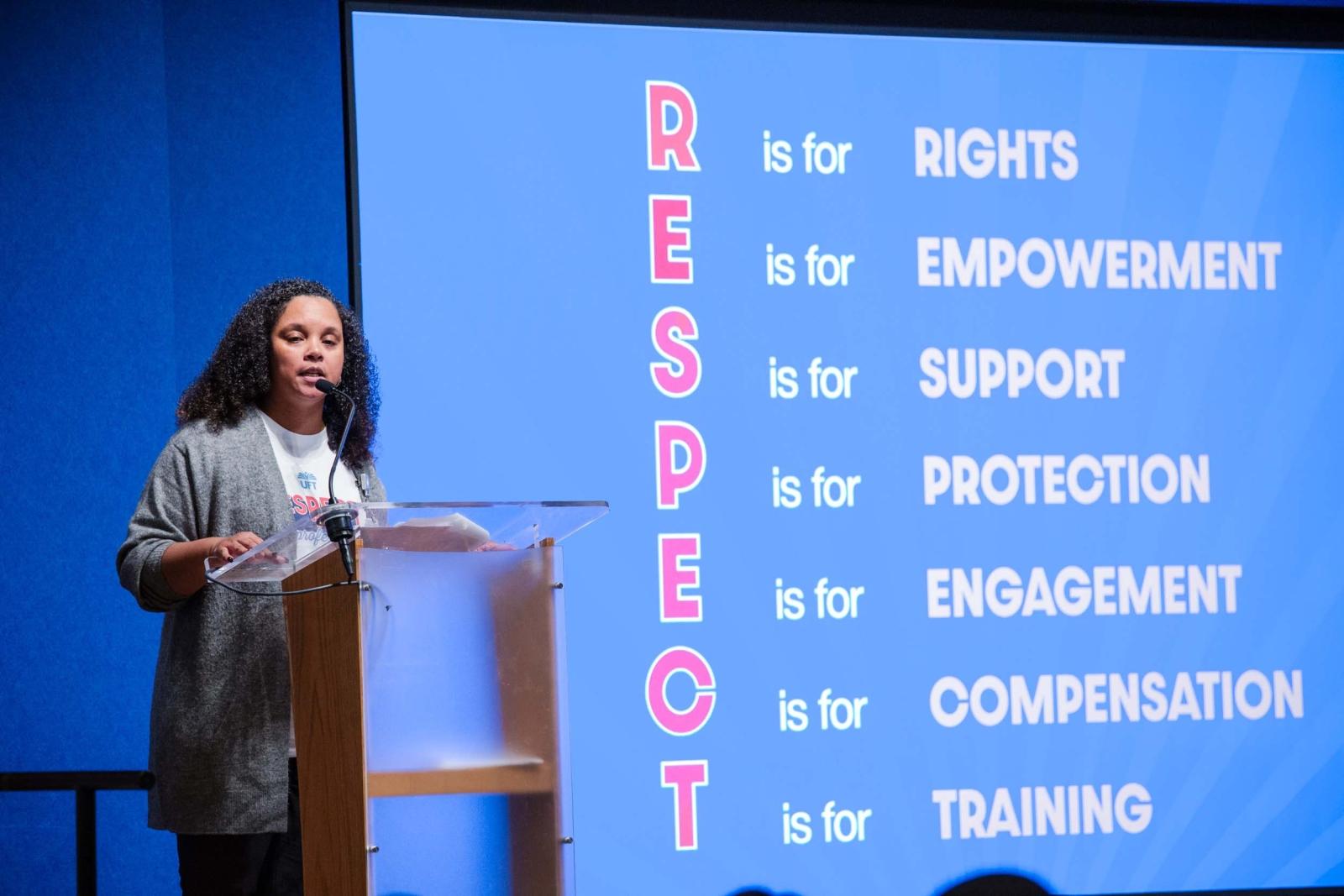
Paraprofessionals Chapter Chairperson Priscilla Castro says the DOE must increase pay to members of their profession.
The UFT Paraprofessionals Chapter launched a new RESPECT campaign at its Nov. 21 paraprofessional representatives meeting to demand that the Department of Education pay paraprofessionals more, value their work and uphold their rights.
“Enough is enough,” said Paraprofessionals Chapter Chairperson Priscilla Castro. “Paraprofessionals are the backbone of the school system, yet we can’t pay our bills on our salary and the DOE routinely violates our rights in schools.”
Castro said that improving working conditions for paraprofessionals will improve the learning conditions of their students. “We love our jobs, and we love our students,” she said. “We are ready to stand up and use our voice, not just for ourselves but for our students.”
The campaign will focus on the elements that spell out the letters in RESPECT: rights, empowerment, support, protection, engagement, compensation and training.

According to a recent UFT special education survey, there are at least 1,558 unfilled paraprofessional positions across 474 schools. Union officials say the DOE’s hiring process for paraprofessionals is needlessly complex and cumbersome, and turnover is high because pay is low and the working conditions are challenging.
The Paraprofessional Chapter created work groups of members to flesh out each element of the campaign.
Diana Judge, a paraprofessional representative at P256, a District 75 school in Queens, said her work group of five paraprofessionals communicated via Zoom calls and email throughout October and November to develop a plan of action for engagement.
“We’re going to keep engaging everybody in the building so that everybody’s aware and on the same page,” she said.
The top priority of the RESPECT campaign is the demand that the DOE pay paraprofessionals more. As of Jan. 18, 2024, the city’s 26,000 paraprofessionals earn from $30,510 a year, if they have only a high school diploma, to $47,120, if they have a bachelor’s degree and at least one year of experience, along with a longevity payment of a maximum of $3,508 for 15 or more years of service.
“The salary scale is broken,” said Castro. “It is not sustainable for people living in New York City.”
Jeremiah Bornemann, a paraprofessional representative at PS/IS 276 in Manhattan who participated in the work group on compensation, asked for a show of hands at the meeting for how many paraprofessionals are working second or even third jobs. “One job is enough,” he said. “We shouldn’t be priced out of our communities.”
UFT President Michael Mulgrew pointed out at the union’s Nov. 20 town hall that since contractual increases are a percentage of a smaller base salary for paraprofessionals, the pay gap between paraprofessionals and teachers has widened over the decades.
The RESPECT campaign will also tackle rights. Many paraprofessionals report being pulled away from the students to whom they’re assigned to cover absences, lunches and recess, which are not part of their duties. They also report inadequate personal protective equipment for toileting or diaper changes.
“We must know and take advantage of the rights we currently have, know how to enforce those rights and strategize about how to build on and expand those rights,” said Castro.
Castro said the campaign will also press the DOE to improve training. She said paraprofessionals, when hired, receive little instruction on supporting students with disabilities — even students with severe disabilities who require special equipment like lifts for toileting.
“They don’t know what they’re getting into,” she said. “Which might explain why many do not stay.”
She said the DOE has also neglected to provide training to paraprofessionals on critical topics such as educating children with autism.
The DOE training should be specific to the paraprofessional’s role, Castro said.
“We are fighting to make the DOE provide instruction on the specifics of how to be a health paraprofessional or a crisis paraprofessional, or how to take data for a behavior intervention plan,” she said.
The UFT Teacher Center, Castro said, has had to fill in the gaps on even basic topics like safe diaper-changing.
At the paraprofessional representatives meeting, Mulgrew vowed not to let up until the DOE made significant changes.
“From now on, there will be no more lack of respect for paraprofessionals,” he said.