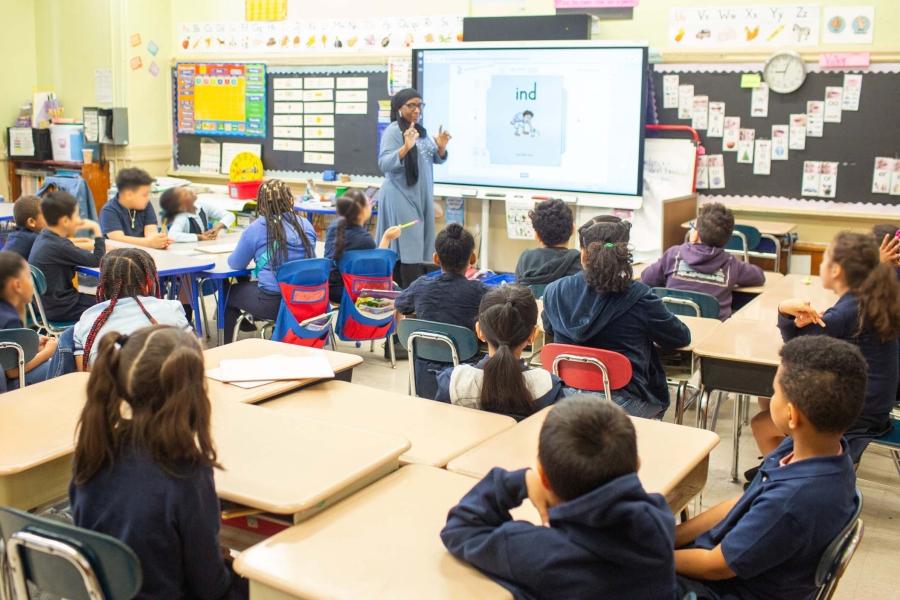
Teacher Eunice Muhammad at PS 35 in the Bronx says her 2nd-graders will benefit from having a maximum of 20 students, down from 25, in her integrated co-teaching class come September.
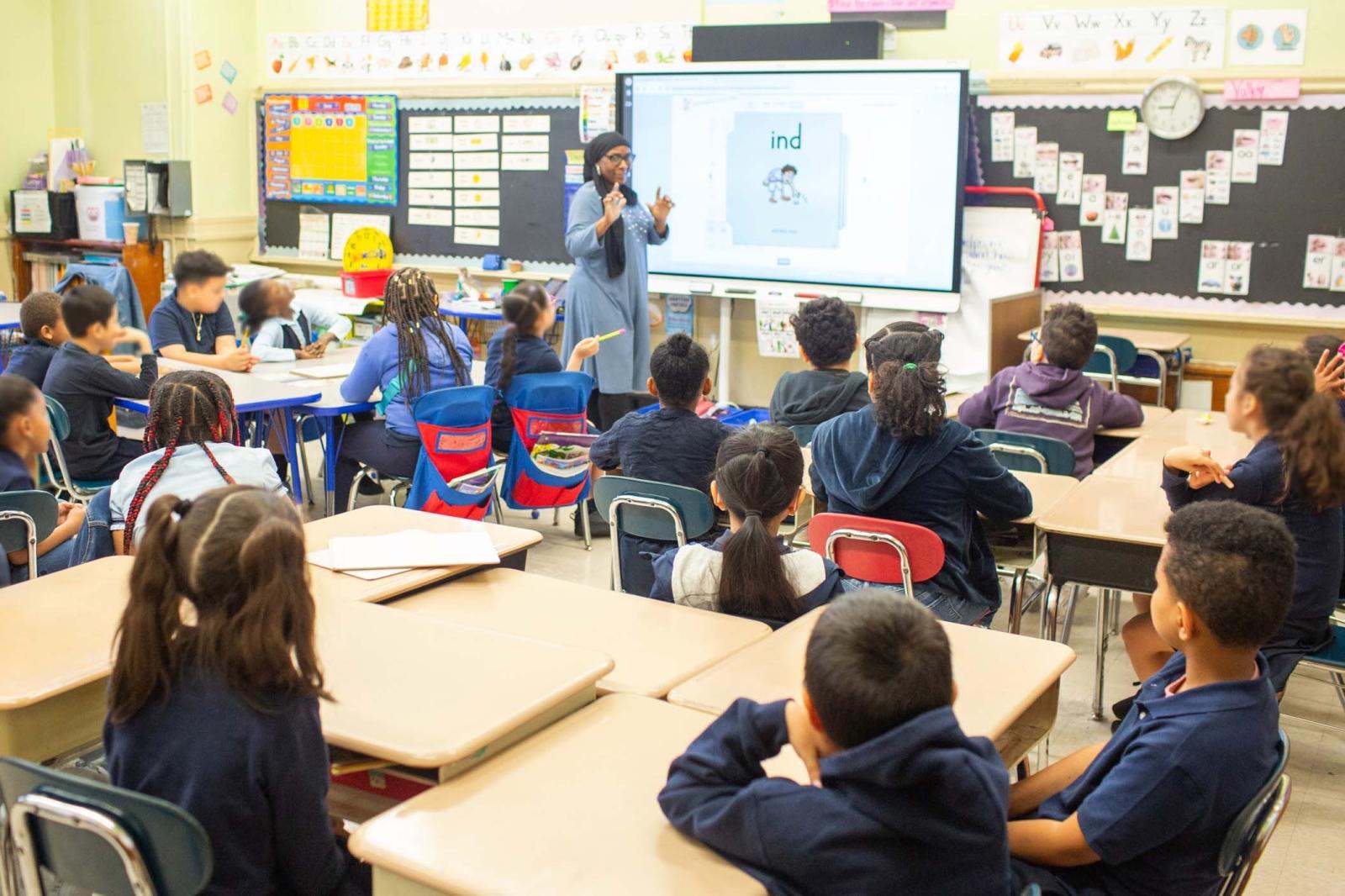
With the class size reduction funding that their schools received this spring, more UFT members will have optimal teaching conditions next school year and are confident that students will benefit from the additional time and attention they receive.
The city Department of Education notified about 750 public schools on April 9 that their funding applications were successful. The DOE says the additional state funds earmarked for class size reduction will pay for a total of 3,700 new teachers to reduce class sizes in the 2025-26 school year. The funds will be ongoing from year to year, barring a citywide financial crisis.
“This is the adults, the elected officials, the parents, the teachers, everyone saying, ‘New York City’s children deserve to have smaller class sizes and we’re going to make it work,’” UFT President Michael Mulgrew said at the news conference on the announcement at PS 88 in Queens. “And today is part of the celebration, because there were a lot of doubters out there for years.”
Since the state class size law took effect in 2022, educators and parents have kept up the pressure on city and DOE officials to implement the landmark legislation.
The law requires that by September 2028, 100% of New York City classrooms meet the new class size limits: a maximum of 20 students in kindergarten through 3rd grade, 23 in grades 4-8 and 25 in high school. The DOE was required to have 20% of classrooms in compliance the first year and an additional 20% each subsequent year. Thanks to the additional funding, the DOE will meet the 60% requirement for the 2025–26 school year.
PS 88 Chapter Leader Cari Ann Lobello said educators, the principal and parents at her school collaborated on the funding application, and the school received the full amount it requested to hire six new educators — one teacher each for grades 1 to 5 and a cluster teacher. The new hires will bring the school into 100% compliance with the new class sizes, she said.
“I cannot tell you the difference that it makes regarding our time and resources in the classroom,” Lobello said. When classes are smaller, she said, the students “get more of us.”
The school application process grew out of a suggestion by Tracy Ivanic, the chapter leader at PS 153 in Queens, after the DOE distributed last year’s funding in an ineffectual manner. The UFT successfully pushed the DOE, which was resistant at first, to agree to the new process.
Ivanic said her school will use the funding it applied for and received to hire six new teachers, which will bring 12 classrooms under the new limits. About two-thirds of the school’s classes will be in compliance with the law next school year, she said.
“Our plan was solid,” Ivanic said. “The rooms are just sitting there empty, so we said, ‘We can fill every one of those empty rooms if you do this for us.’”
PS 189 in Manhattan applied for and received funding for two bilingual teachers so two currently bridged bilingual classes of about 32 students each can be divided and each grade can have its own class.
Chapter Leader Christine La Plume said the new configuration will be better for both students and teachers. “Now kids will be able to be in a classroom where the curriculum is focused on their grade level,” she said. “The teacher will not have to do double the work.”
Chapter Leader Margaret Joyce at PS 35 in the Bronx said her school’s class size funding will pay for two classroom teachers and a cluster teacher position, which will bring the school into full compliance with the class size law. PS 35 teacher Eunice Muhammad said her 2nd grade integrated co-teaching class will be one of the beneficiaries, with only 20 students enrolled, down from the current 25.
The school has been gradually reducing class sizes since the law was passed, said Joyce, but it was not possible to get 1st-grade and 2nd-grade class sizes into compliance without this additional funding.
“It’s so clear to anybody in a classroom that one of the easiest ways to improve education and narrow the achievement gap is to have smaller classes,” she said.
In December 2024, about 800 schools — half of all public schools in New York City — applied for funding to implement class-size reduction plans designed by the school community. Mulgrew said the UFT will provide help next year to the schools that did not receive funds this year.
The next challenge to overcome, union leaders say, will be securing the capital funding to increase capacity in schools that do not have available space to reduce class size.