
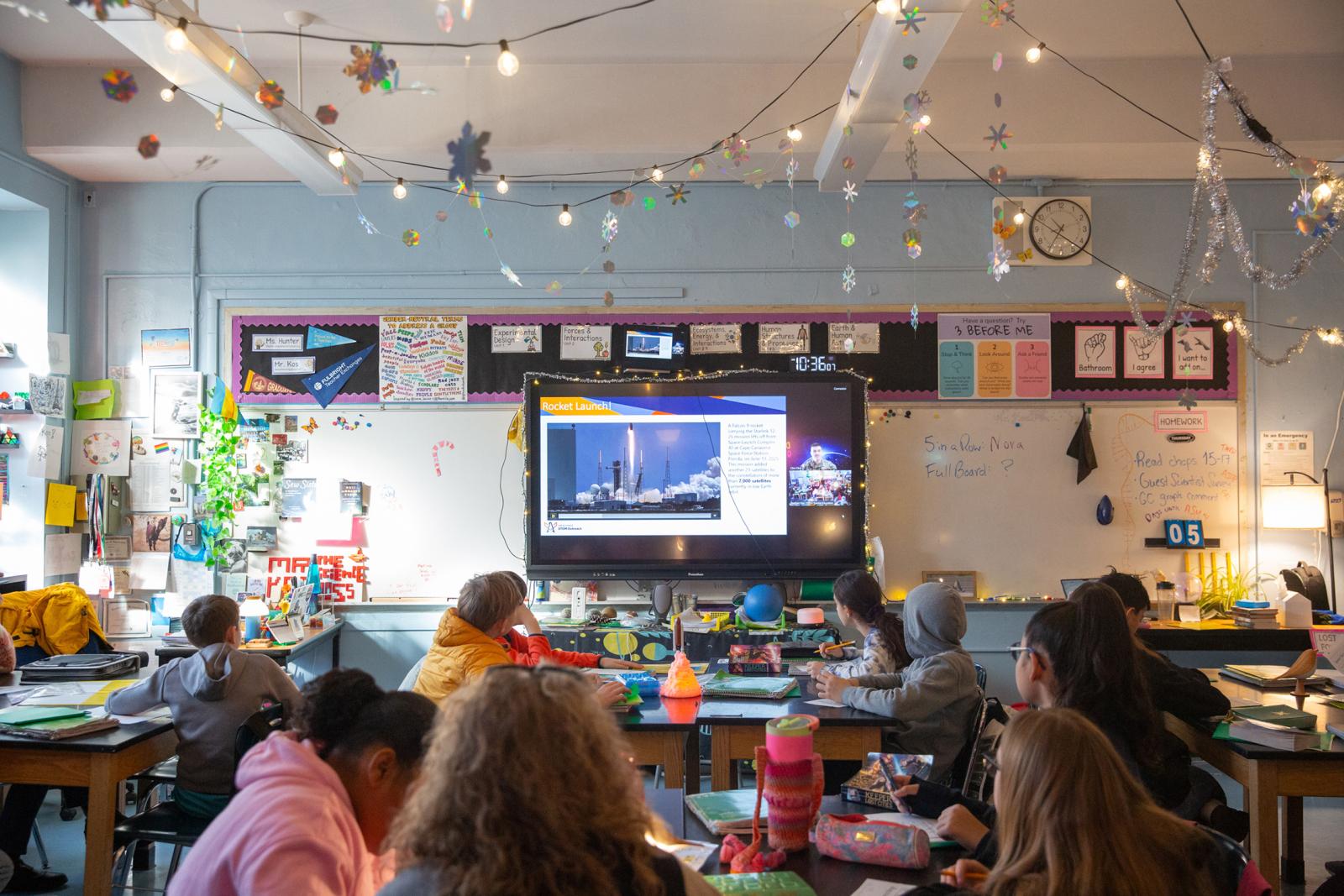
Students in Stephen Kos' science class at Manhattan's MS 245 engage in a virtual visit by technical sergeant with the U.S. Space Force.
Last year, a 6th-grade student who doesn’t often speak up asked a visiting microbiologist a question during a live Q&A. This fall, that same student referenced the experience unprompted during a lunch club. A real scientist had taken their question seriously! A year later, they were still glowing.
That’s just one of many moments I’ve witnessed after students have proudly interacted with a practicing scientist — and why I’ll keep inviting scientists into our classroom. Our students have met microbiologists, a geophysicist, a plant biologist, a biochemist, a glaciologist, a Space Force Guardian and two astronauts still up in space. Arranging such visits doesn’t require a big budget, and there are programs to fit every comfort level, from a low-lift livestream to a yearlong partnership with a local researcher.
Why it matters
STEM has a long history of being exclusionary, and some students have a hard time imagining themselves in such roles. Bringing real scientists into the classroom, especially ones who share students’ backgrounds, helps expand that vision. Many visitors have spoken openly about challenges they’ve faced and how they’ve persevered. Hearing those stories helps students see themselves in science.
There’s also something electric about a guest appearance. It breaks up daily routines and shows students that their learning connects to real work happening right now. I put up a countdown on the whiteboard, share the news with families, and by the time our scientist signs on, the students can hardly wait. It shows them a pathway into a STEM career — and when a working researcher confirms something you taught last week, it validates students’ learning as a meaningful step on that pathway.
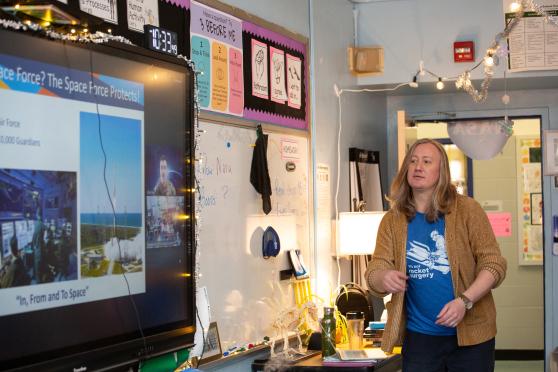
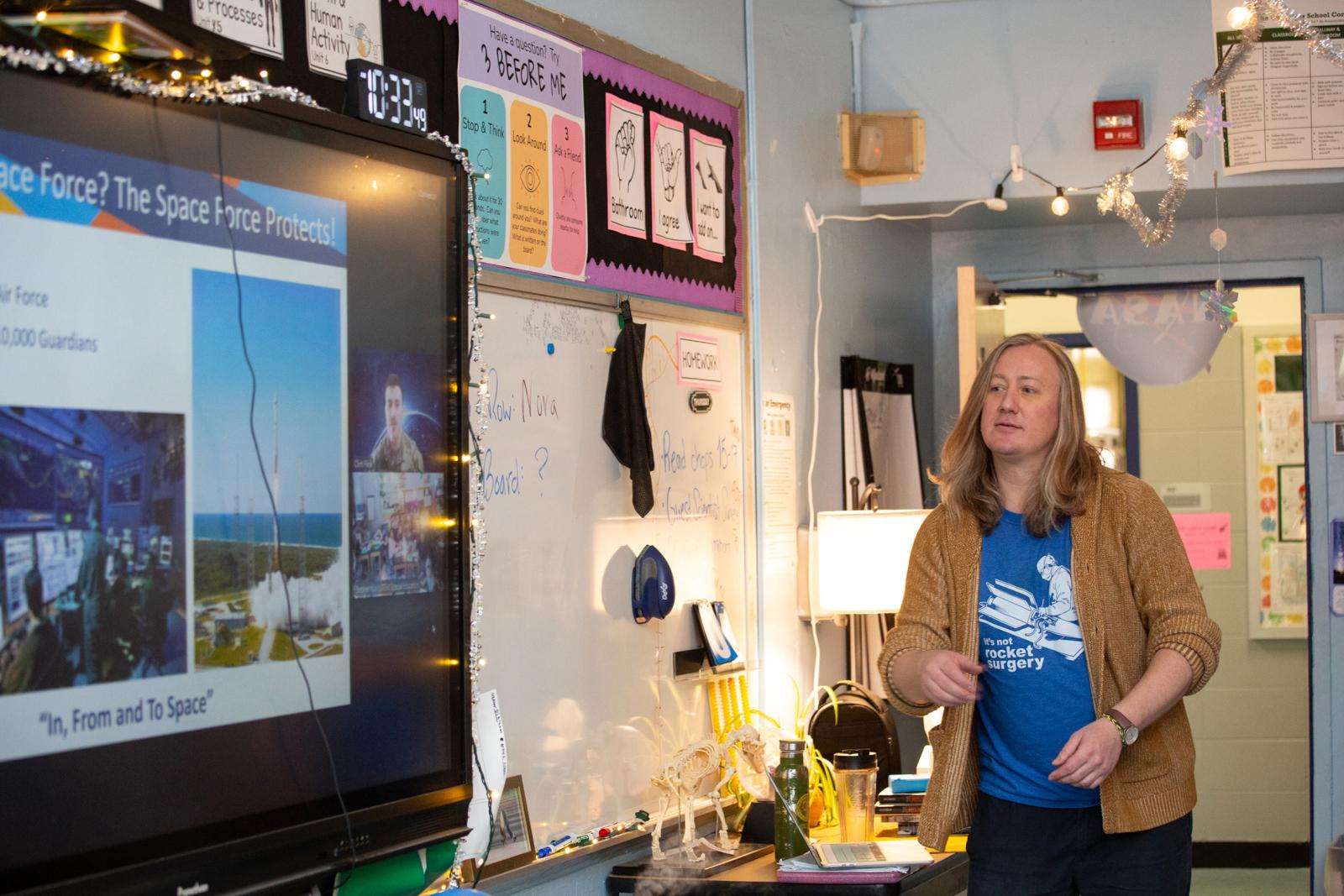
Teacher Stephen Kos says bringing scientists into the classroom can show students a pathway into a career in STEM.
Where to Find Them
National Geographic Explorer Classroom is the easiest place to start. Nat Geo hosts free, live 45-minute presentations featuring scientists, conservationists, and explorers, offered twice a day at 10 a.m. and 2 p.m. Sessions are professionally produced, listed well in advance and posted afterward so absent students can still watch.
Skype a Scientist is the most personalized option, matching your classroom with a researcher for a virtual Q&A of 30 to 60 minutes. You can request a scientist in whatever field aligns with your unit and/or whose background mirrors your students’ identities, and visitors will often Skype in for multiple class sections. There’s a suggested donation of $20 per match, but it’s not required.
STEMtoSpace connects classrooms with Space Force Guardians — professionals who monitor rocket launches and protect satellite infrastructure. The free program runs each December and pairs you with a Guardian for a live virtual session. For our classes, the visit connected seamlessly with a physics unit built around “Hidden Figures” — a text many schools use in Expeditionary Learning — and a paper rockets experiment through Urban Advantage.
Scientist-in-Residence through the New York Academy of Sciences is for teachers who want a longer-term partnership, matching you with a local scientist who visits your school monthly. We had a glaciologist work with our 7th-graders, bringing new life to concepts from density to climate change. Applications open in May.
And if you’re ready to plan a schoolwide event, consider applying for a NASA In-Flight Education Downlink with the International Space Station — our students asked astronauts questions on live television on the second day of school this year. Unforgettable.
Making the Most of a Visit
First, let your principal know you’re inviting a guest scientist into the classroom — even if the visit is virtual — they may even want to drop by!
I schedule visits toward the end of a unit, once students have enough background to ask meaningful questions. A few days beforehand, I assign a Google Form introducing the scientist’s work — a brief video, a few easy-to-answer questions where the wrong options aren’t even in the right ballpark, and a space to submit questions for the guest.
Then I use those submissions to warm-call students. If someone asks something thoughtful, I pull them aside and say, “This was a great question — I’d love for you to ask it live,” and write it on an index card for them. Students who rarely raise their hands suddenly have a prepared moment in the spotlight, and they rise to it every time.
I request the presenter’s slides in advance, use them to generate a list of key terms, mix in vocabulary from our unit, and create bingo cards, using a free site like My Free Bingo Cards. Students listen for the presenter to say the terms — five in a row wins first, then the whole board. Students love it. The winners beam with pride, but everyone is listening and learning.
Afterward, I send out a quick four-question survey: a 1-to-5 rating of the speaker, a prompt asking students to select any statements that apply — “I felt like I had things in common with them,” “I thought their research seemed really helpful or important,” “I was really interested by their story” — and a space for any final burning questions. The responses are overwhelmingly positive, and can be surprisingly sweet (“He has the coolest job ever!”); I share the highlights with the guest in a follow-up thank-you email.
Start Small
You don’t need to plan an elaborate event. A Nat Geo Explorer Classroom session requires nothing more than registering and pressing play. Put up that countdown and write those index cards. You might be surprised how long the moment lasts.
Stephen Kos is a science teacher at MS 245 on Manhattan’s Upper West Side.