Union schools city lawmakers
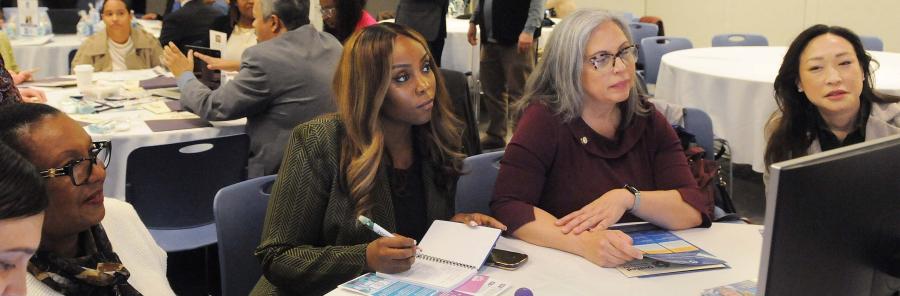
City Council members get information on NYC Childcare Navigator during a UFT mini “class” at the annual legislative breakfast.
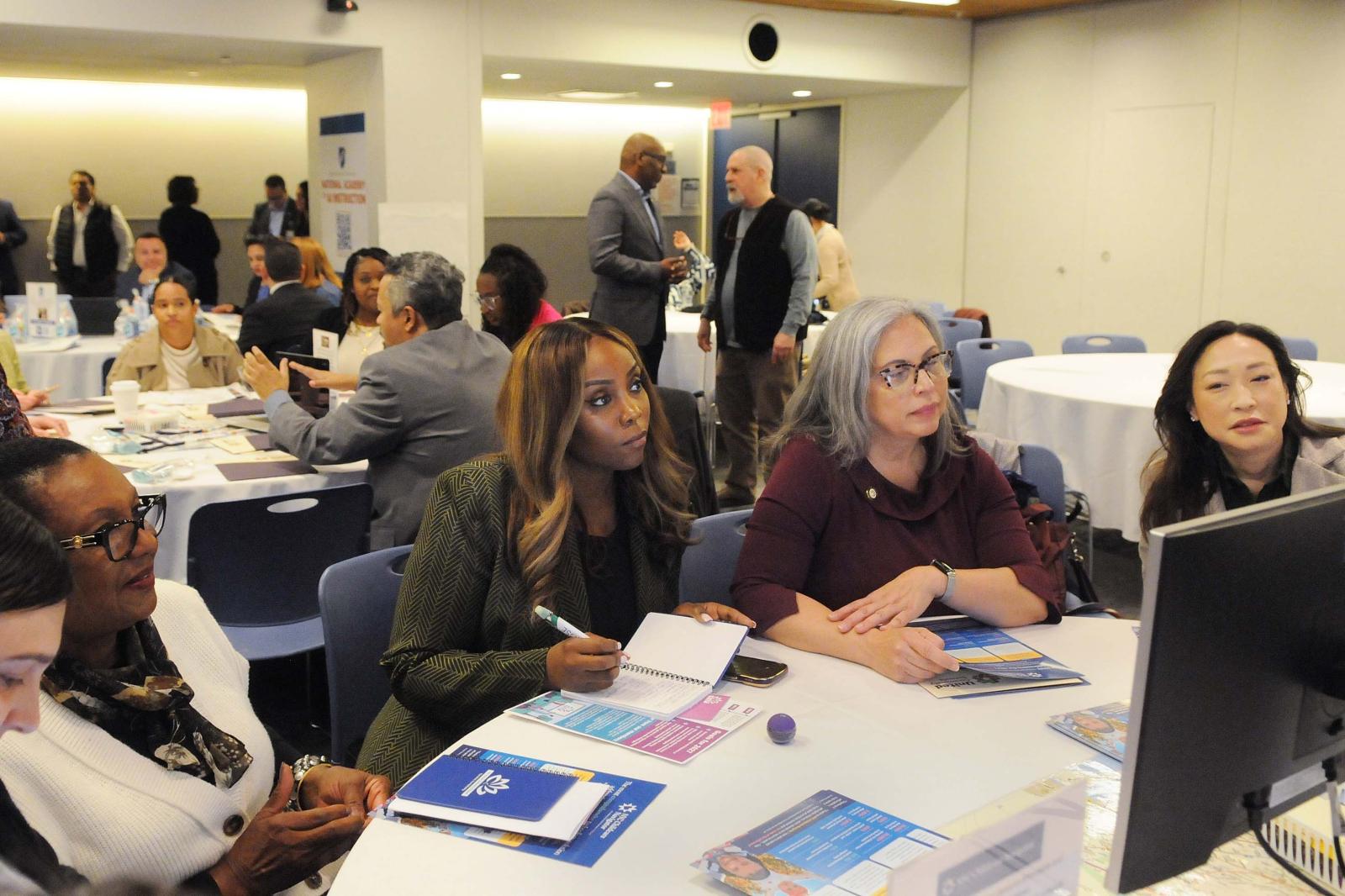
The UFT set up its annual legislative breakfast for New York City Council members as a mock school day in an effort to help lawmakers learn how union members, students and communities benefit from city-funded UFT programs.
City Council members and their staff took mini classes at the fictitious PS 1960, the Albert Shanker School (named for the year of the union’s founding and one of its founding members). Lawmakers at the April 23 event participated in learning stations for UFT programs, including the UFT Teacher Center, United Community Schools, the BRAVE anti-bullying hotline, Dial-A-Teacher, the Member Assistance Program (MAP), Progressive Redesign Opportunity Schools for Excellence (PROSE) and NYC Childcare Navigator.
UFT President Michael Mulgrew thanked the City Council for its “phenomenal partnership” with the union. “Each of the programs that we ask you to support actually deliver directly to the communities and the children of New York City,” he said.
Mulgrew extolled the virtues of UFT programs, touting the UFT Teacher Center as “the main driver for training teachers” in New York City and praising the superiority of the NYC Childcare Navigator app in helping families find child care.
He spoke to the union’s being in the vanguard with United Community Schools, which serve whole communities, both students and their families. The PROSE program is also driving innovation in education by empowering members at nearly 300 schools to make key pedagogical and curricular change.
Mulgrew cautioned that major change was still required to address the dire shortage of paraprofessionals in city schools, starting with passage of the RESPECT check legislation, which would provide the lowest-paid title an annual payment of $10,000.
City Council Speaker Julie Menin reaffirmed the Council’s strong commitment to passing the legislation, which a supermajority of members support. “I can assure you, we are going to ensure that the paras get the pay that they deserve,” she said.
Council members received additional information about various UFT programs at the learning stations.
Social worker Steven Sulzer, a part-time clinician at MAP, explained that the program helps members on multiple levels, including “destigmatizing mental health and mental health-related issues.” It assists members, refers them to other services, such as support groups, and has a 24-hour helpline, he said.
At the United Community Schools station, social worker Emily Sanchez spoke about the services she provides at the Bronx Writing Academy, a middle school. She speaks with families about dangers in the community, such as sex trafficking, and helps them develop safety plans. During standardized testing season, she talks with students about coping skills for anxiety. Communication with families is a central focus, she said, “and that’s something that you get with a United Community School — we wrap around services and we speak the language.”