Room to breathe
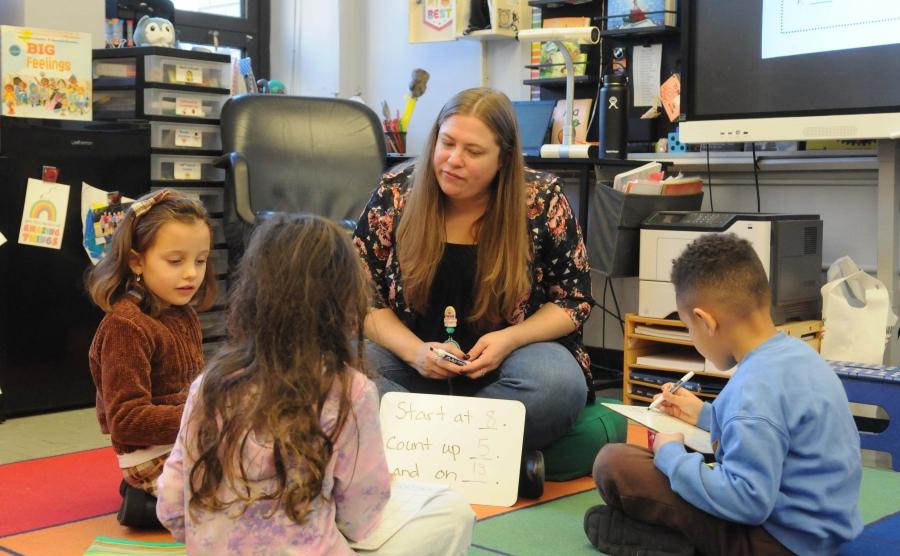
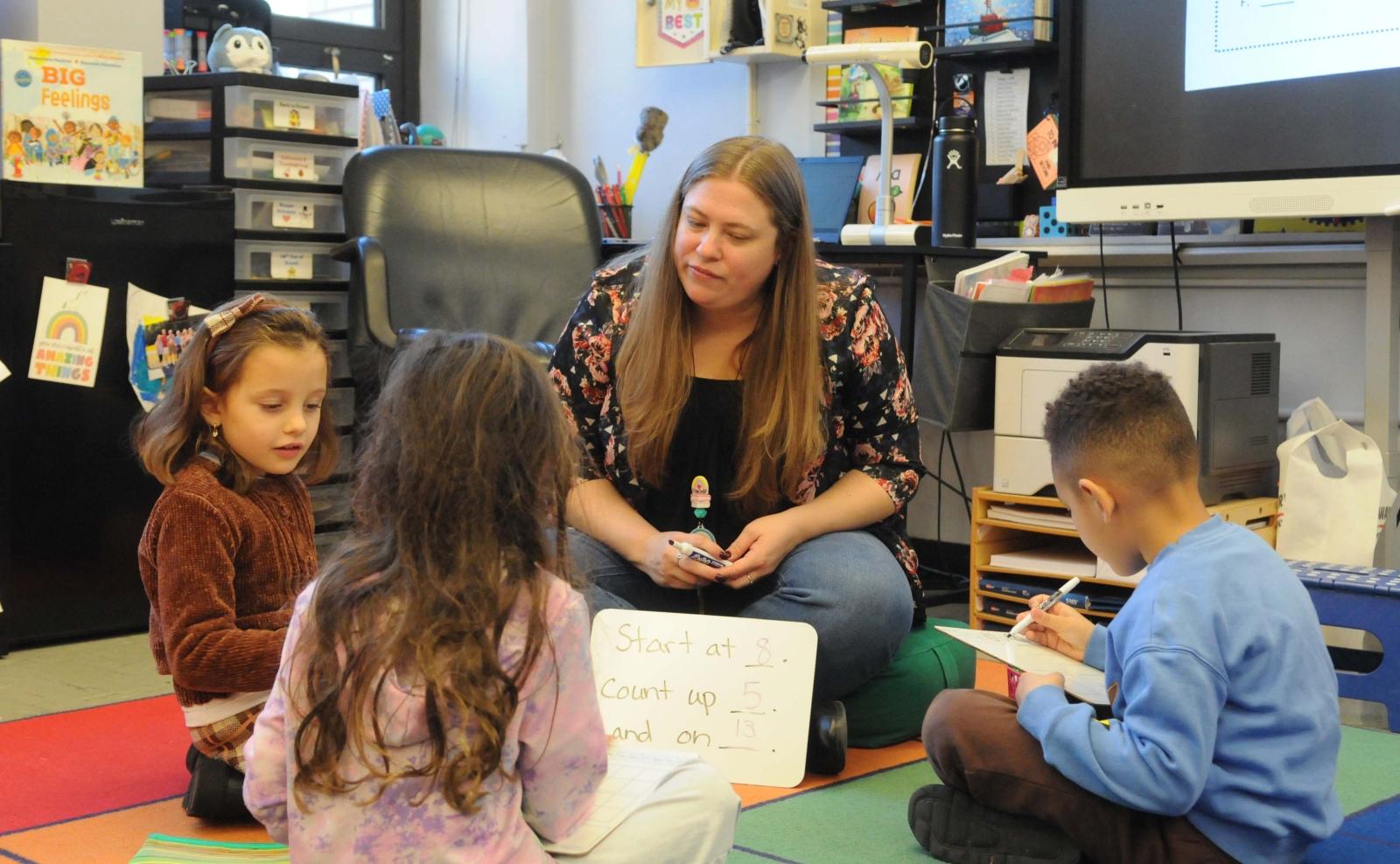
Co-Chapter Leader Bethany Trench of Manhattan’s PS 199 says having just 18 1st-graders allows her to innovate in ways she was unable to before.
A calmer pace. More individualized attention. Fewer distractions. Those are among the greatest benefits teachers say they’re seeing in their classrooms this year as the state class size law enters its third year of implementation.
“I’ve got 18 kids. I can do anything! We are unstoppable!” exclaimed Bethany Trench, the co-chapter leader at PS 199 on the Upper West Side in Manhattan. Trench was rhapsodizing about how many fewer students she has in her 1st-grade class this year compared to previous years, thanks to the class size legislation Gov. Kathy Hochul signed in 2022.
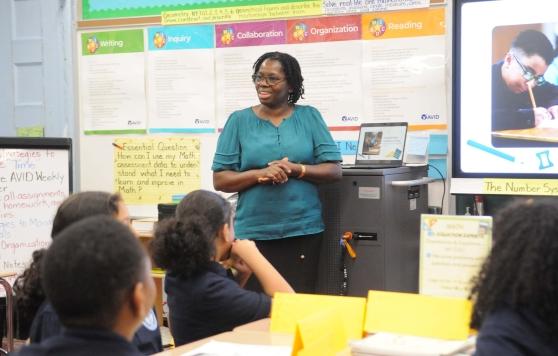
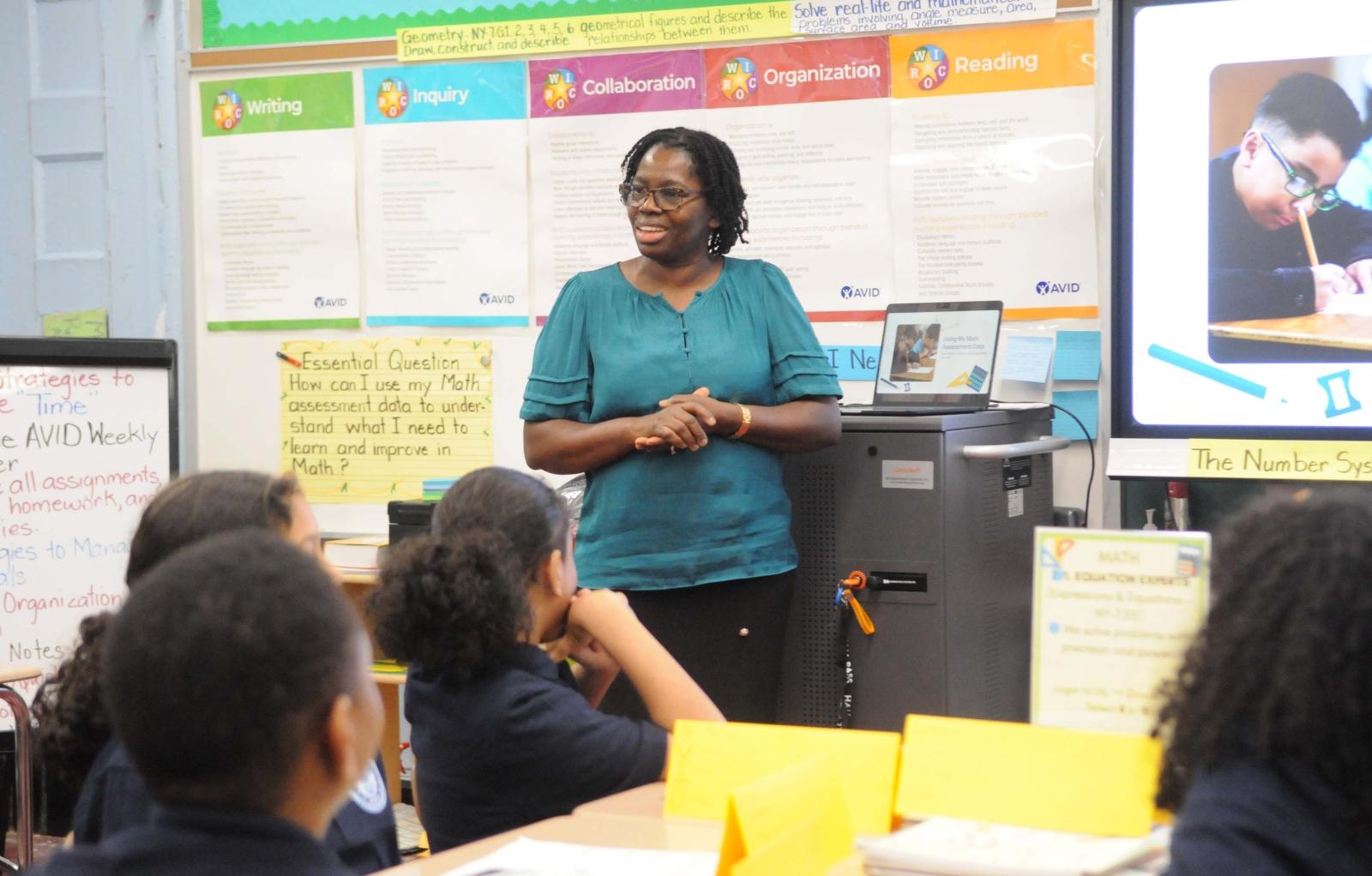
PS/IS 155 teacher Charmaine Green says fewer students mean less classroom tension.
PS 199 was one of the 750 city schools that applied for and were approved for funding last school year. The school used its allotment to hire nine teachers this school year, as it outlined in its submitted plan.
The class size law — the product of years of lobbying by the UFT and public school parents — set the following limits for New York City public schools: a maximum of 20 students in kindergarten through grade 3, 23 in grades 4–8 and 25 in high school. Integrated co-teaching classes must abide by these same size limits, while the number of students with disabilities in an ICT class may not exceed 40% of the total class register. The DOE was required to bring 20% of classrooms within the limits in the first year, 40% in year two and 60% this school year. All classrooms must be in compliance by September 2028.
The DOE hired about 3,600 teachers to fill 3,700 openings this September tied to class size reduction, using $240 million in recurring state funding earmarked this school year for lowering class sizes.
For many teachers, the impact has been immediate and dramatic. “The kids are less distracted, we have more time to conference with students, and we have more options for the physical space,” said Nicole Keaster, the chapter leader and a 7th-grade ICT ELA teacher at IS 5 in Elmhurst, Queens, whose class size fell from 30 students to 23. “It’s all the things we’ve been dreaming about,” she said.
At PS/IS 155 in Brooklyn, where funding allowed the school to hire 14 teachers, the middle school finally has enough staff to departmentalize. Charmaine Green, who teaches a college and career readiness class, said last year’s classes of 26 students left her students “literally on top of each other.” Now, with 22 to 24 students in each of her classes, tensions have eased. “Before, if they stepped on somebody’s toe, then it resulted in a fight,” Green said. “Now the students have space.”
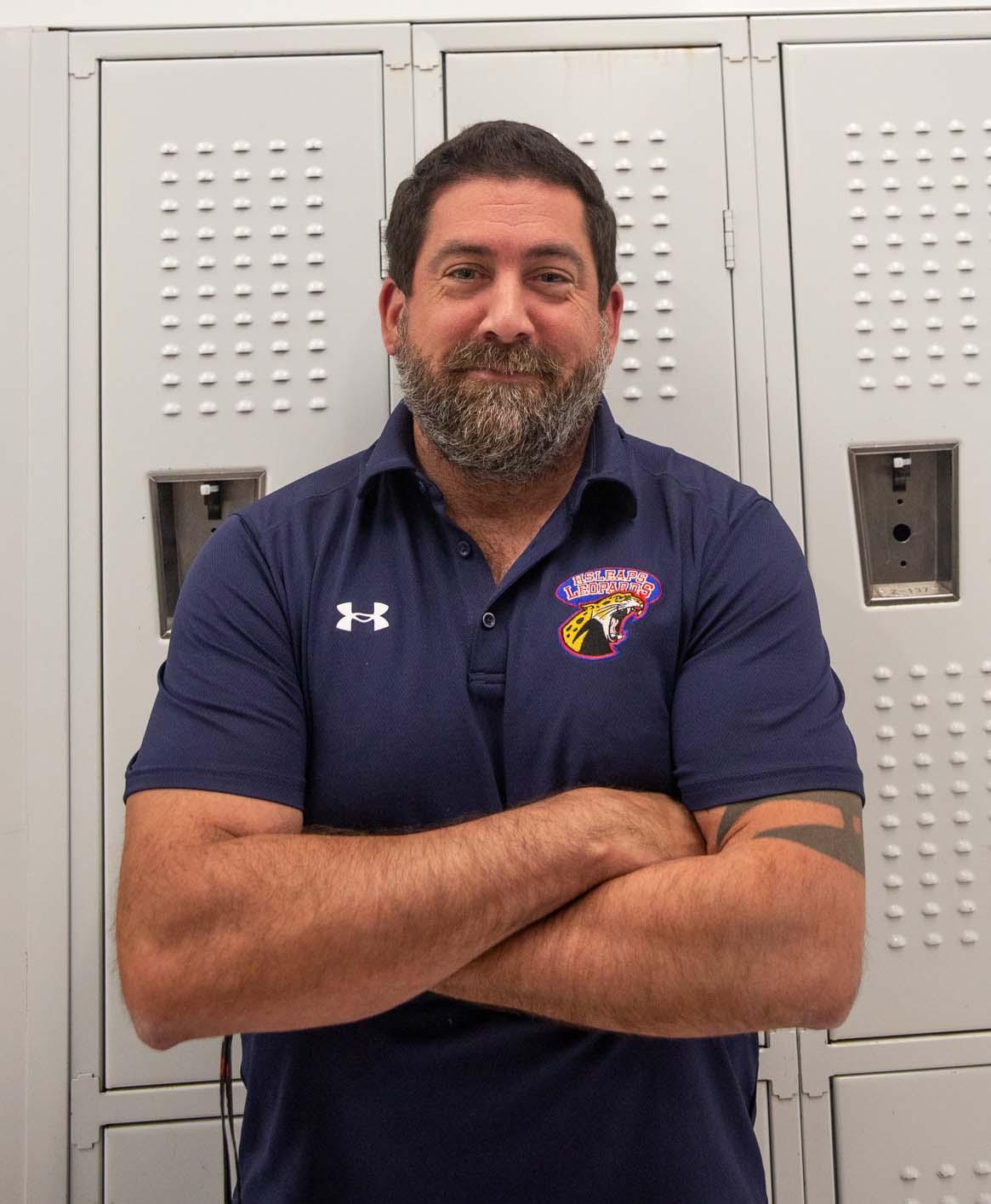
Special education teachers report some of the most significant gains. At the HS for Law Enforcement and Public Safety in Jamaica, Queens, chapter leader Justin Ruddy said smaller integrated co-teaching classes mean “the special education students are getting more one-on-one focus,” he said. With fewer students, special education teachers are also able to give IEPs more attention, he said.
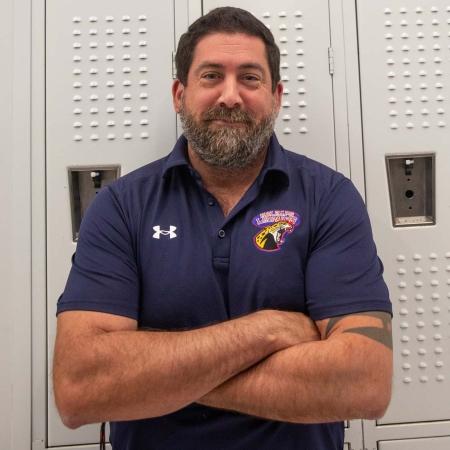
Chapter Leader Justin Ruddy says special education teachers at his Queens high school have more time to address IEPs.
Students are the clear beneficiaries of smaller classes, said Jennifer Zodda and Stefanie Barnas, the co-chapter leaders at Staten Island’s PS 6. Zodda, who teaches 2nd grade, has been able to reduce the number of reading groups in her class from five or six to just four, allowing her to meet with each group more often. Barnas said fewer students also means less noise and few conflicts. “It’s a calmer environment,” she said.
At IS 27 on Staten Island, chapter leader Melanie Sepulveda said the funding helped the school reduce class sizes in the 7th grade this year. The change, she said, has been transformative. “I had no idea the impact it was going to have — the amount of time freed up, the amount of individualized attention the kids can get. It’s light years of difference,” she said.
Smaller classes have also improved small-group instruction. “It’s one thing to keep 15 kids actively engaged independently,” Sepulveda said. “It’s quite another to have 25 while I work with my five students.”
In her 20 years of teaching, Sepulveda has routinely taught three sections of about 30 students each. This year she has three classes of 20, 22 and 28 — 20 fewer students in total to teach, assess and grade. “I got to know my kids so much faster, because there’s so many fewer of them to get to know,” she said.
The DOE’s early progress was possible because a minority of schools already met the class-size requirements or were able to use available space in their buildings once they received state funding to hire new teachers. But the hardest phase is still ahead.
“The next two school years will be the real test of the DOE’s commitment,” said UFT President Michael Mulgrew, noting that Mayor-elect Zohran Mamdani is a strong supporter of smaller class sizes.
Principals had until Dec. 3 to complete a mandatory DOE survey to apply for funding for next year to use available space for class size reduction or to indicate if their school grounds could accommodate a new annex or extension.
The DOE has granted one-year space exemptions to 113 schools where the DOE and the School Construction Authority have already funded, planned and sited a new construction project at the school or nearby. “The exemption means there’s an actual plan in place for that school to come into compliance,” Mulgrew said. “An exemption is not a free pass to avoid compliance.”
The city’s nine overenrolled specialized high schools also received exemptions.
Nearly 500 of the city’s 1,600 public schools do not have enough space to fully comply with the law at their current enrollment, according to December 2024 DOE data.
“It comes down to the School Construction Authority,” Mulgrew said. “We need to build capacity to get to 100% compliance.”